Diamond Basics
What Is a CVD Diamond? How It Differs from HPHT
CVD and HPHT are the two methods for growing lab-grown diamonds. We explain in plain language how each works, how it affects the stone and where it is stated on the report.
3 min readUpdated: October 7, 2026
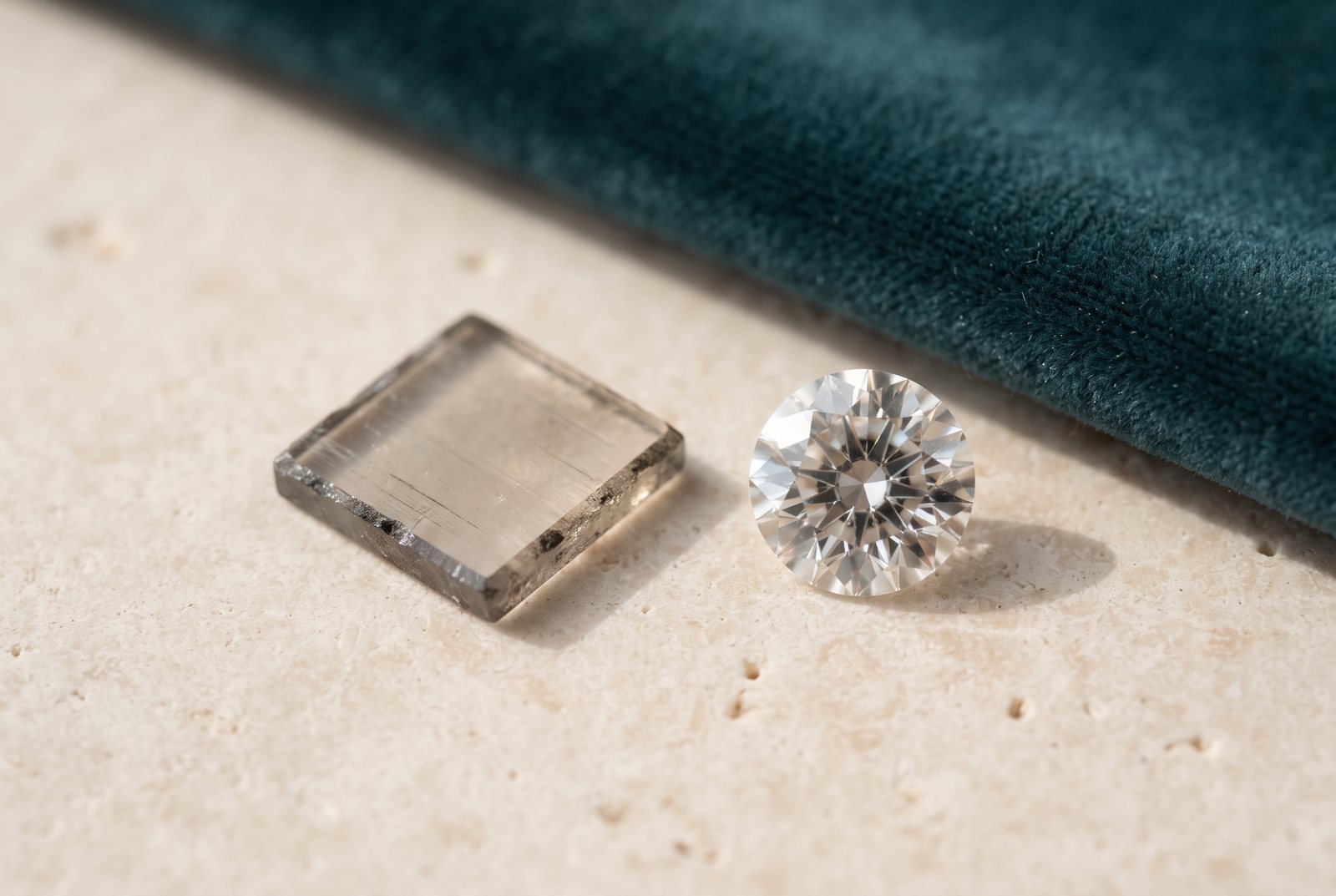
Short answer: A CVD diamond is a real diamond grown in a laboratory by “chemical vapour deposition”: in a vacuum chamber, a carbon-containing gas is turned into plasma and carbon atoms settle layer by layer onto a diamond seed. In the other method, HPHT, the high pressure and temperature deep in the earth are recreated. Both methods give the same diamond; the stone’s quality is decided not by the method but by the 4C values on its report.
How does CVD work?
- Seed: A thin slice of diamond (the seed) is placed in a vacuum chamber.
- Gas: A carbon-rich gas mixture (usually methane and hydrogen) is fed into the chamber.
- Plasma: Microwave energy turns the gas into plasma, and carbon atoms separate from the gas.
- Growth: The freed carbon atoms settle layer by layer onto the seed, in diamond’s crystal pattern. Growth takes weeks.
- Cutting: The grown crystal is cut and polished just like a natural diamond.
Some CVD stones may receive an extra treatment after growth (usually a high pressure, high temperature treatment) to improve their colour. This is stated on the stone’s report; for untreated stones, the report may say “As Grown”.
How does HPHT work?
In the HPHT (high pressure, high temperature) method, the conditions that form diamonds deep in the earth are recreated with large presses. At pressures tens of thousands of times atmospheric pressure and temperatures above 1,300 °C, a carbon source dissolves in molten metal and crystallises on a diamond seed.
The differences between CVD and HPHT
| CVD | HPHT | |
|---|---|---|
| Method | Growth layer by layer from gas | Crystallisation by pressure and heat |
| Environment | Vacuum chamber, plasma | Large press, molten metal |
| Possible inclusions | Very small dark points | Very small metallic inclusions |
| Result | A real diamond | A real diamond |
These differences are detected with special instruments in gemmological laboratories; it is not possible to tell stones grown by the two methods apart with the naked eye.
Which is better?
Both methods grow extremely high-quality stones. What decides a stone’s value and beauty is not the method but its cut, colour and clarity. So the question “what does this stone’s report say?” matters more than “CVD or HPHT?” What are the 4Cs?
The report states the method: lab-grown diamond reports state that the stone was grown in a laboratory and usually by which method (CVD or HPHT), along with any post-growth treatment. How to read a report.
Is a CVD diamond a real diamond?
Yes. A CVD diamond has the same chemistry (pure carbon), crystal structure, hardness and light as a natural diamond. It should not be confused with imitation stones (cubic zirconia, moissanite). More: what is a lab-grown diamond and what synthetic and artificial diamond mean.
Frequently asked questions
It is a diamond grown in a laboratory by Chemical Vapour Deposition. It is a real diamond, with the same properties as a natural diamond. The method on its own is not a sign of quality. High-quality stones are grown by both methods; what decides is the cut, colour and clarity on the report. No. A CVD diamond is a diamond too, so it does not darken, change colour or go dull. Yes. Diamond testers that measure thermal conductivity show a CVD diamond as diamond; whether it is natural or lab-grown is determined by special instruments in a gemmological laboratory.What does CVD diamond mean?
Which is higher quality, CVD or HPHT?
Do CVD diamonds darken?
Does a CVD diamond test as diamond on a jeweller's tester?
Blog
Keep reading
Diamond Basics
Diamond Clarity Scale: From FL to I3
Clarity is how visible the tiny marks inside a diamond are. We explain the FL, IF, VVS, VS, SI and I grades with a…
3 min read
Diamond Basics
Cubic Zirconia vs Diamond: What Is the Difference?
Cubic zirconia looks like a diamond at first glance, but it is a very different stone. We explain the differences in hardness, light, weight…
3 min read
Diamond Basics
Diamond Sparkle: What Are Brilliance, Fire and Scintillation?
A diamond's sparkle comes from three separate light effects: brilliance, fire and scintillation. We explain what decides them and what people really mean by…
3 min read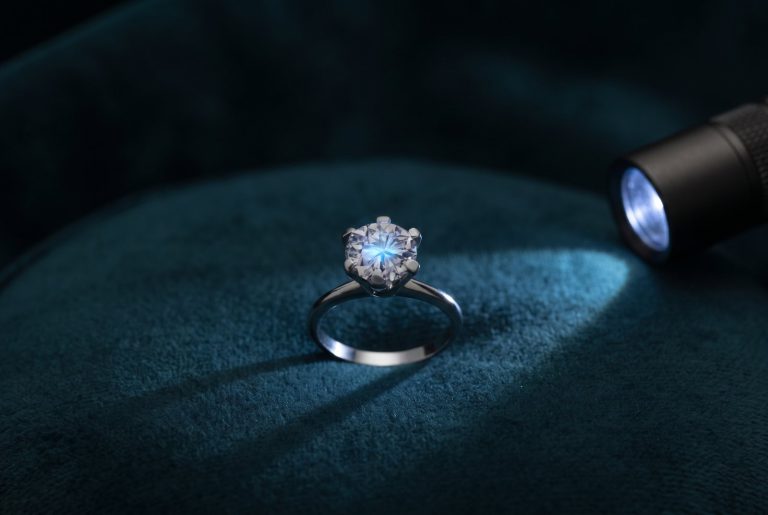
Diamond Basics
What Is Diamond Fluorescence? Good or Bad?
Fluorescence is the blue glow some diamonds give off under ultraviolet light. We explain how it appears on the report, whether it affects how…
3 min read