Diamond Basics
Diamond Sparkle: What Are Brilliance, Fire and Scintillation?
A diamond's sparkle comes from three separate light effects: brilliance, fire and scintillation. We explain what decides them and what people really mean by 'brilliance grades'.
3 min readUpdated: October 7, 2026
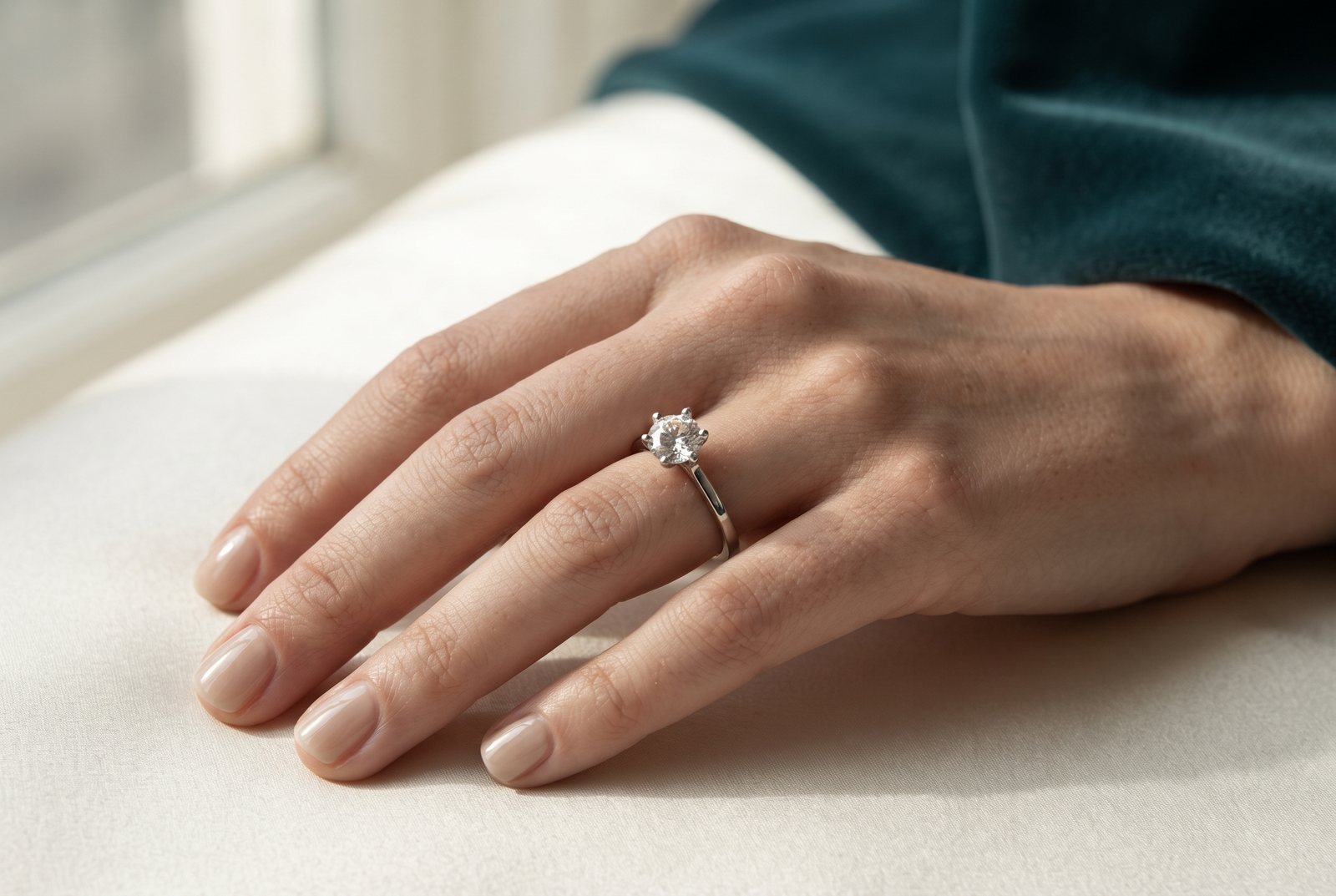
Short answer: A diamond’s “brilliance” is really a combination of three light effects: brilliance (the white light that returns from the stone), fire (light split into rainbow colours) and scintillation, or sparkle (the points of light that flash on and off as the stone or you move). All three are decided mostly by cut quality. In everyday Turkish, “diamond brilliance grades” usually refers to the clarity scale (VVS, VS, SI).
1. Brilliance
This is white light entering the stone, reflecting off the lower facets and returning to the eye through the top. In a well-proportioned diamond most of the light comes back, and the stone looks “lit from within”. In a poorly proportioned stone, light escapes from the bottom or sides, and the centre looks dark or glassy. Cut quality.
2. Fire
A diamond splits white light into colours like a prism; when you move the stone, you see red, orange and blue flashes. This is called fire. Fire is decided by the stone’s power to split light into colours (0.044) and by the angles of the crown facets. Fire shows most under point light sources such as candlelight or spotlights.
3. Scintillation (sparkle)
This is the play of bright and dark points that appear on the surface as the stone, the light or the eye moves; it makes a diamond look “alive”. In a stone with good symmetry, the sparkle is even and balanced. Step cuts (emerald, baguette) have less sparkle but broader “mirror” reflections. Emerald cut.
What are “diamond brilliance grades”?
In Turkey, “brilliance grade” or “brilliance scale” usually means the clarity grades: FL, IF, VVS1, VVS2, VS1, VS2, SI1, SI2 and I. These measure not the stone’s brilliance but how visible the marks inside it are. Clarity does not directly decide the light, but very obvious marks can block its path. More: the clarity scale.
What increases and what reduces brilliance?
| Increases | Reduces |
|---|---|
| Excellent / Very Good cut | A cut that is too deep or too shallow |
| Good symmetry and polish | Oil and dirt built up on the stone |
| An open setting that lets in light | A thick frame that covers too much of the stone |
| A clean surface | Large inner marks close to the surface |
In everyday wear, what dulls a diamond most is dirt: hand cream, soap and skin oils build up under the stone and stop light getting in. A simple clean brings back the brilliance of the first day. How to clean a diamond.
It changes with the light: shop spotlights make every stone look very brilliant. When judging a stone, also look at it in daylight, in shade and in office light; a well-cut stone stays lively in every light.
Does a lab-grown diamond sparkle the same?
Yes. A lab-grown diamond has the same refractive index and power to split light into colours as a natural diamond; with the same cut it gives the same brilliance, fire and sparkle. What decides brilliance is the cut, not the origin. What is a lab-grown diamond?
Frequently asked questions
First of all on cut quality: proportions, symmetry and polish. How clean the stone is and whether the setting lets in light also affect the brilliance you see. In everyday speech this phrase usually means the clarity grades: FL, IF, VVS1, VVS2, VS1, VS2, SI1, SI2 and I. These measure how visible the inner marks are. No. The stone itself does not go dull; it looks dull because of dirt and oil on its surface. Once cleaned, its brilliance returns. The round brilliant cut gives the most sparkle. Brilliant-style shapes such as oval, pear and cushion are very brilliant too; step cuts such as emerald and baguette give a calmer light.What does a diamond's brilliance depend on?
What are diamond brilliance grades?
Does a diamond lose its brilliance over time?
Which shape sparkles most?
Blog
Keep reading
Diamond Basics
What Do F, G and H Colour Diamonds Mean?
The diamond colour scale runs from D to Z. We explain the difference between E, F, G and H colour stones, whether you can…
3 min read
Diamond Basics
Cubic Zirconia vs Diamond: What Is the Difference?
Cubic zirconia looks like a diamond at first glance, but it is a very different stone. We explain the differences in hardness, light, weight…
3 min read
Diamond Basics
Diamond Clarity Scale: From FL to I3
Clarity is how visible the tiny marks inside a diamond are. We explain the FL, IF, VVS, VS, SI and I grades with a…
3 min read
Diamond Basics
What Is Diamond Fluorescence? Good or Bad?
Fluorescence is the blue glow some diamonds give off under ultraviolet light. We explain how it appears on the report, whether it affects how…
3 min read