Diamond Basics
What Are GIA and IGI Certificates, and How Do You Read Them?
A diamond certificate is the stone's identity. We explain what GIA and IGI reports state, how to verify the report number and what to look for in a lab-grown diamond's report.
4 min readUpdated: October 6, 2026
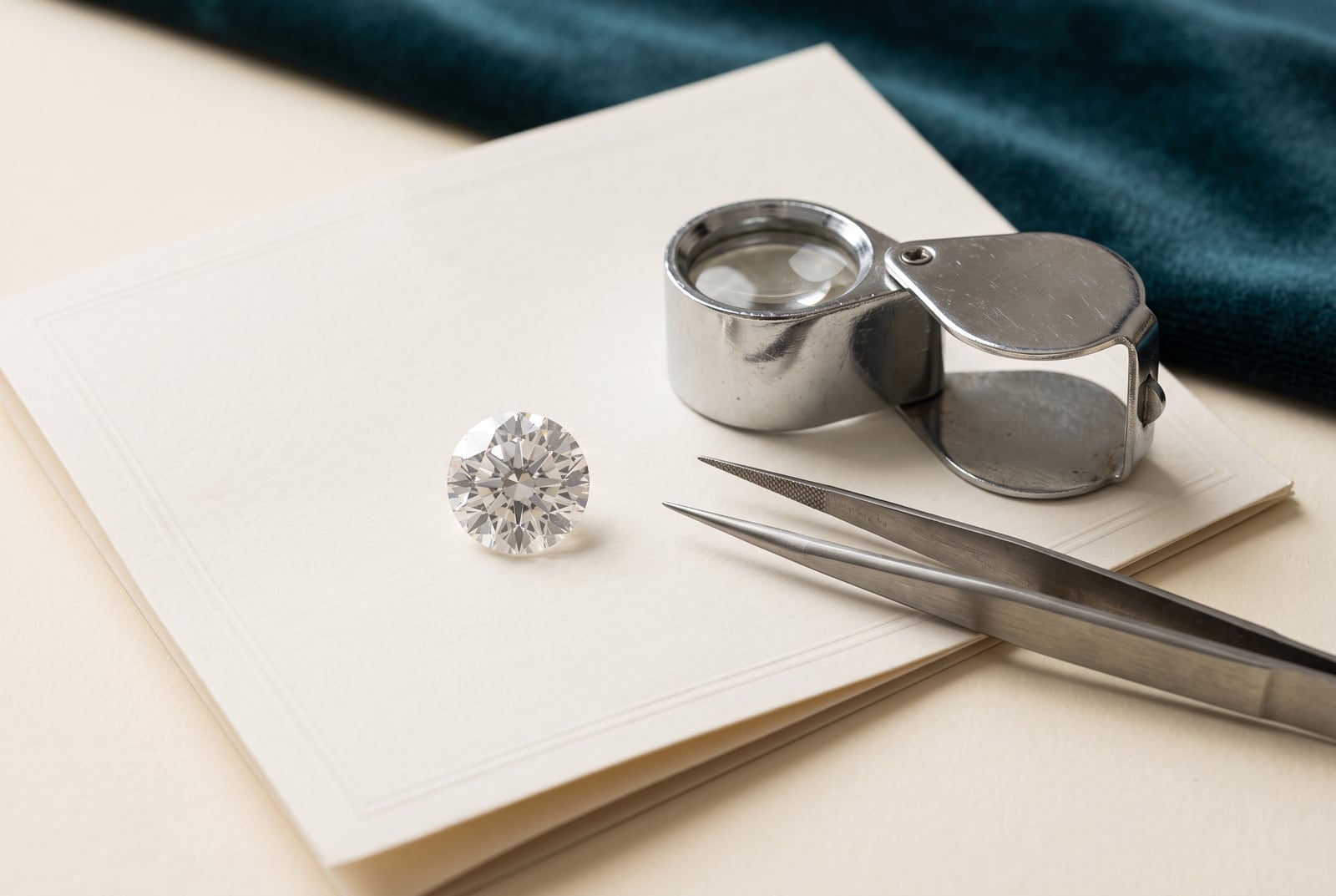
Short answer: A diamond certificate is a report in which an independent gemmological laboratory examines a stone and records its characteristics. The best-known laboratories are GIA, IGI and HRD. The report states the stone’s carat, colour, clarity, cut and measurements, and whether it is natural or grown in a laboratory. The report number can be verified on the laboratory’s website.
What is a diamond certificate and what is it for?
A certificate is what a third party says about the stone, not the seller. Two diamonds can look the same to the naked eye, yet one grade of difference in colour, clarity or cut changes the price noticeably. The certificate records that difference and shows what you are paying for.
Small side stones do not get their own report; the report is for the centre stone of the piece.
Who are GIA, IGI and HRD?
| Laboratory | Full name | Founded |
|---|---|---|
| GIA | Gemological Institute of America | 1931, USA |
| IGI | International Gemological Institute | 1975, Antwerp (Belgium) |
| HRD | HRD Antwerp | 1973, Antwerp (Belgium) |
GIA developed the 4C system used to grade diamonds (carat, colour, clarity, cut) and the D-to-Z colour scale. IGI and HRD work with the same criteria. The report most often seen with lab-grown diamonds is the IGI report.
What does the report say?
- Report number and date: The stone’s identity number.
- Shape and cutting style: Round, oval, emerald cut and so on.
- Measurements: The stone’s dimensions in millimetres.
- Carat: The stone’s weight. More: what is a carat.
- Colour and clarity: More: diamond colour and clarity.
- Cut, polish and symmetry: Workmanship grades that decide how well the stone returns light.
- Fluorescence: How the stone reacts under ultraviolet light.
- Plot: A drawing of the stone’s proportions and where its inner features are.
- Origin: If the stone was grown in a laboratory, the report says so clearly, along with the growth method (CVD or HPHT) and any post-growth treatment.
- Laser inscription: The number inscribed on the stone’s girdle.
How do you verify a certificate?
- Enter the number on the report into the verification page of the laboratory’s own website.
- Compare the details on screen with the report in your hand: carat, colour, clarity and measurements must be the same.
- Ask the jeweller to show you the laser inscription on the stone’s girdle under a loupe. The number must be the same as the report number.
These three steps show that the report is genuine and belongs to the stone in your hand. We also cover this in how to tell if a diamond is real.
Do lab-grown diamonds have certificates?
Yes. Lab-grown diamonds are examined and reported by the same laboratories. The report states clearly that the stone was grown in a laboratory, and the girdle usually carries a laser inscription saying so. That way the stone’s origin stays documented even if it changes hands.
Recent change: In 2025, GIA announced that it would describe lab-grown diamonds with broader categories rather than the detailed colour and clarity grades it uses for natural diamonds. Those who want a detailed letter-and-grade report for a lab-grown diamond usually look to the IGI report.
Should you buy a diamond without a certificate?
For a piece whose centre stone is above a certain size, asking for a certificate is the right thing to do. Without one, you rely only on the seller’s word about the stone’s colour, clarity and origin. For very small stones, it is normal not to have a report.
Frequently asked questions
A GIA certificate is a report in which the Gemological Institute of America, an independent organisation, examines a diamond and records its carat, colour, clarity, cut and measurements. Yes. IGI is an international gemmological organisation founded in Antwerp in 1975, and it issues the report most commonly used for lab-grown diamonds. The report number can be verified on IGI’s website. Both are recognised laboratories using the same criteria. What matters is that the report is genuine and belongs to the stone; you confirm that by checking the report number and the laser inscription. On the verification page of the issuing laboratory’s own website. When you enter the number, the stone’s characteristics appear on screen.What is a GIA certificate?
Is an IGI certificate reliable?
Which is better, GIA or IGI?
Where do you check a certificate number?
Blog
Keep reading
Diamond Basics
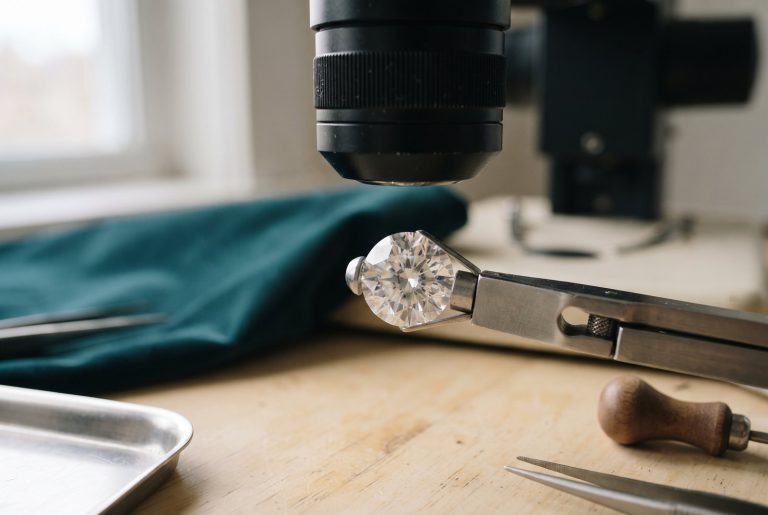
Diamond Clarity Scale: From FL to I3
Clarity is how visible the tiny marks inside a diamond are. We explain the FL, IF, VVS, VS, SI and I grades with a…
3 min read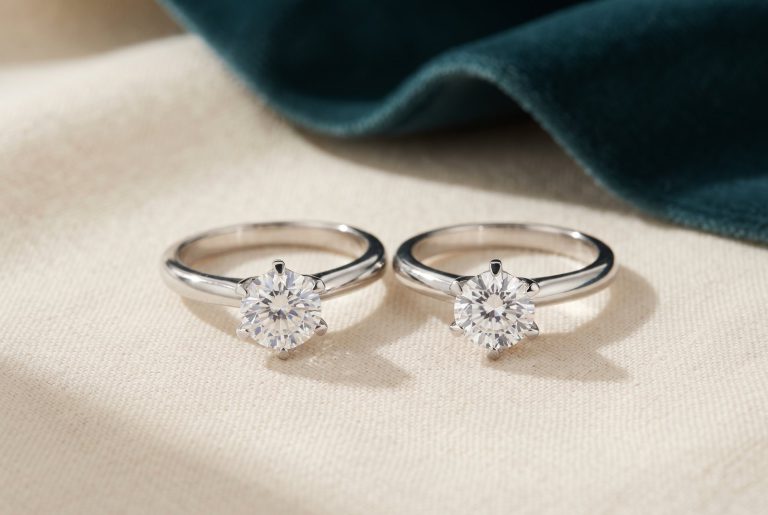
Diamond Basics
Cubic Zirconia vs Diamond: What Is the Difference?
Cubic zirconia looks like a diamond at first glance, but it is a very different stone. We explain the differences in hardness, light, weight…
3 min read
Diamond Basics
Diamond Sparkle: What Are Brilliance, Fire and Scintillation?
A diamond's sparkle comes from three separate light effects: brilliance, fire and scintillation. We explain what decides them and what people really mean by…
3 min read
Diamond Basics
What Is Diamond Fluorescence? Good or Bad?
Fluorescence is the blue glow some diamonds give off under ultraviolet light. We explain how it appears on the report, whether it affects how…
3 min read