Buying Guide
Should You Buy a Lab-Grown Diamond? Pros and Cons
A lab-grown diamond is a smart choice for some people and not for others. We explain its pros and cons honestly, and who it is the right choice for.
3 min readUpdated: October 7, 2026
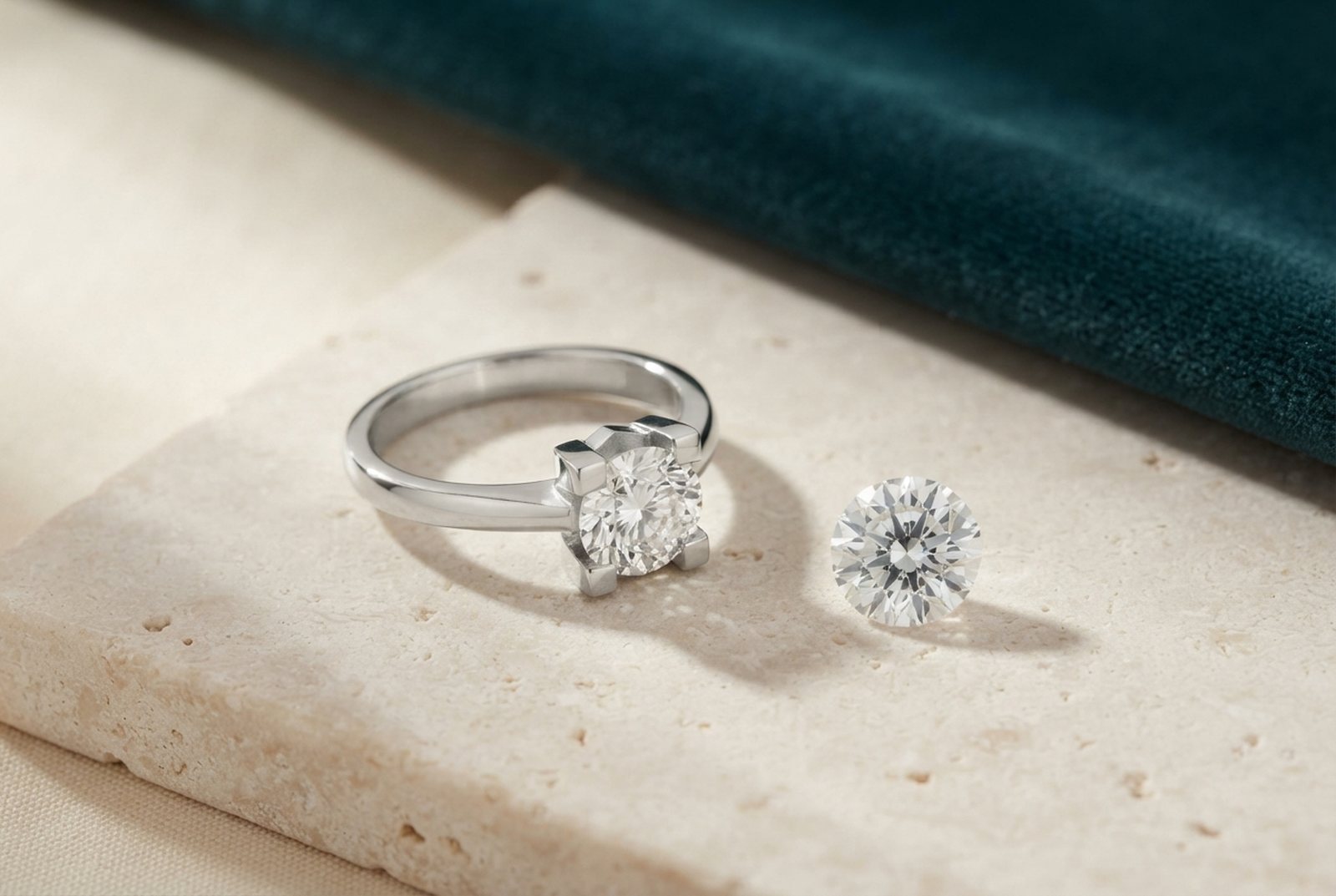
Short answer: If you are buying it to wear, to love and to carry a memory, a lab-grown diamond is a very strong choice: it is a real diamond, it gives you a bigger or cleaner stone for the same budget and it is certified. If you are buying it as an investment or to sell later at its value, it is not the right choice, because its resale value is low. The decision depends on why you are buying the stone.
The pros
A real diamond
A lab-grown diamond is not an imitation. It has the same crystal structure, the same hardness (Mohs 10) and the same light refraction as a natural diamond. It cannot be told apart with the naked eye or a jeweller’s loupe. What is a lab-grown diamond?
More for the same budget
At the same carat, colour and clarity, a lab-grown diamond is noticeably more affordable than a natural diamond. That difference shows up in your ring as a bigger stone, a whiter colour or a cleaner clarity.
Certified and traceable
Independent laboratories also report lab-grown diamonds on the 4C criteria. The report states the stone’s origin clearly, and the report number can be laser-inscribed on the stone’s girdle. How to read a certificate.
No mining needed
The stone is grown in a controlled environment. Knowing its origin and staying out of the mining chain is an important reason for many people.
The cons
Low resale value
The second-hand market for lab-grown diamonds is limited and their value is low. If you plan to sell the ring later or keep it as an investment, this is an important drawback. Can you sell a diamond?
No “rarity” story
For some people, the millions of years it takes a natural diamond to form carry an emotional value. A lab-grown diamond is the same stone but does not carry that story. This is a difference of meaning, not of quality.
Prices can change over time
As production technology develops, lab-grown diamond prices can change. This does not matter much to someone buying to wear; it matters to someone who wants to store value.
Who is it the right choice for?
| Situation | Our suggestion |
|---|---|
| A proposal on a limited budget, with a big, clean stone in mind | Lab-grown diamond |
| An eternity ring, tennis bracelet or earrings for everyday wear | Lab-grown diamond |
| Investment, selling later | Natural diamond |
| The story of natural formation matters | Natural diamond |
An honest note: we say openly why we sell lab-grown diamonds: because they offer a more beautiful ring for the same budget. But if you are thinking of a stone as an investment, the right choice may be a natural diamond. The decision should be made with the right information.
Do not confuse lab-grown diamonds with look-alikes
Moissanite and cubic zirconia look like diamond but are not diamond; their hardness, light and value are different. “Lab-grown diamond” and “diamond imitation” are not the same thing. What is moissanite? · Cubic zirconia versus diamond.
Frequently asked questions
No. A lab-grown diamond is a real diamond; its chemical, physical and optical properties are the same as a natural diamond. The fakes and imitations are other stones that look like diamond. No. Because it is a diamond, it does not darken, change colour or go cloudy. If it looks dull, that is dirt and oil on its surface; once cleaned, its light returns. Most reviews depend on why the person bought the stone. Those who bought it to wear are happy; those who care about resale value criticise it. Both are right from their own point of view. Not with the naked eye or a loupe. Its origin is determined with special instruments in gemmological laboratories, which is why it should be bought with its report.Is a lab-grown diamond fake?
Does a lab-grown diamond deteriorate over time?
Why do online reviews of lab-grown diamonds differ?
Can a jeweller tell a lab-grown diamond?
Blog
Keep reading
Buying Guide
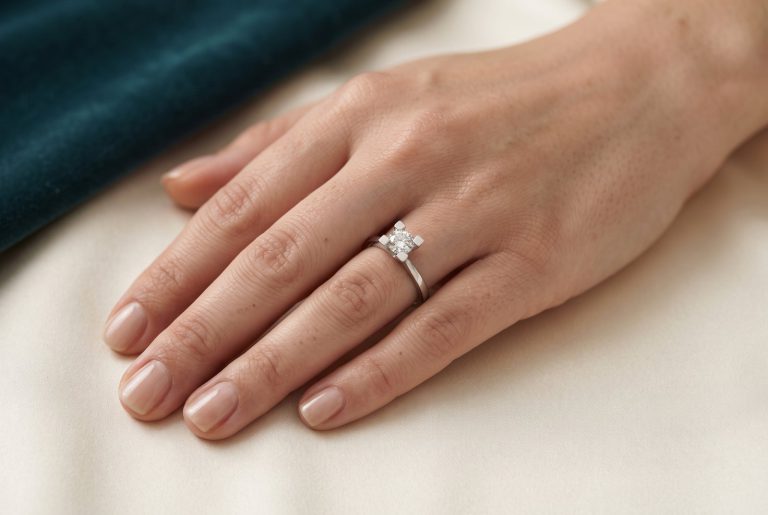
1 Carat Solitaire: How Big Is It and What Sets the Price?
A 1 carat round solitaire measures about 6.5 mm across. We explain how it looks on the finger, its size in each shape and…
3 min read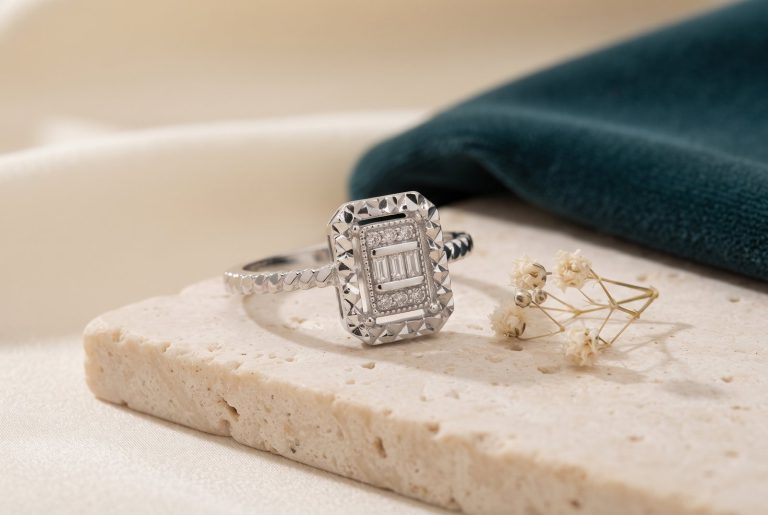
Buying Guide
What Determines Baguette Ring Prices?
A baguette ring's price is not set by a single stone but by the number of stones, their total carat, how well they match…
4 min read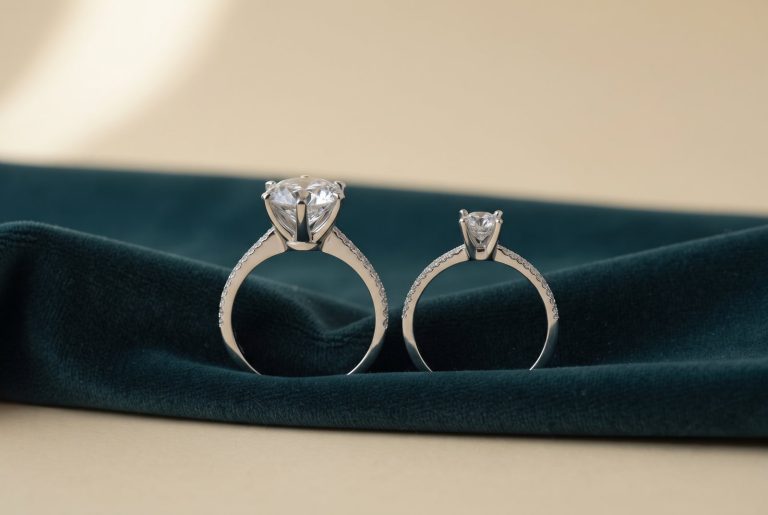
Buying Guide
What Makes Solitaire Ring Prices Vary?
Two solitaires of the same carat can differ greatly in price. We explain how the stone's 4Cs, its shape, its certificate and the setting…
4 min read
Buying Guide
How Many Carats Should a Solitaire Be?
The right carat depends on the shape of the hand, style and budget. We show how stones from 0.30 to 3 carats look on…
3 min read