Buying Guide
Can You Sell a Diamond? Resale Value, Honestly
A diamond can be sold, but it cannot be cashed in as easily as gold. We explain honestly the resale value of natural and lab-grown diamonds and what is checked when you sell.
4 min readUpdated: October 7, 2026
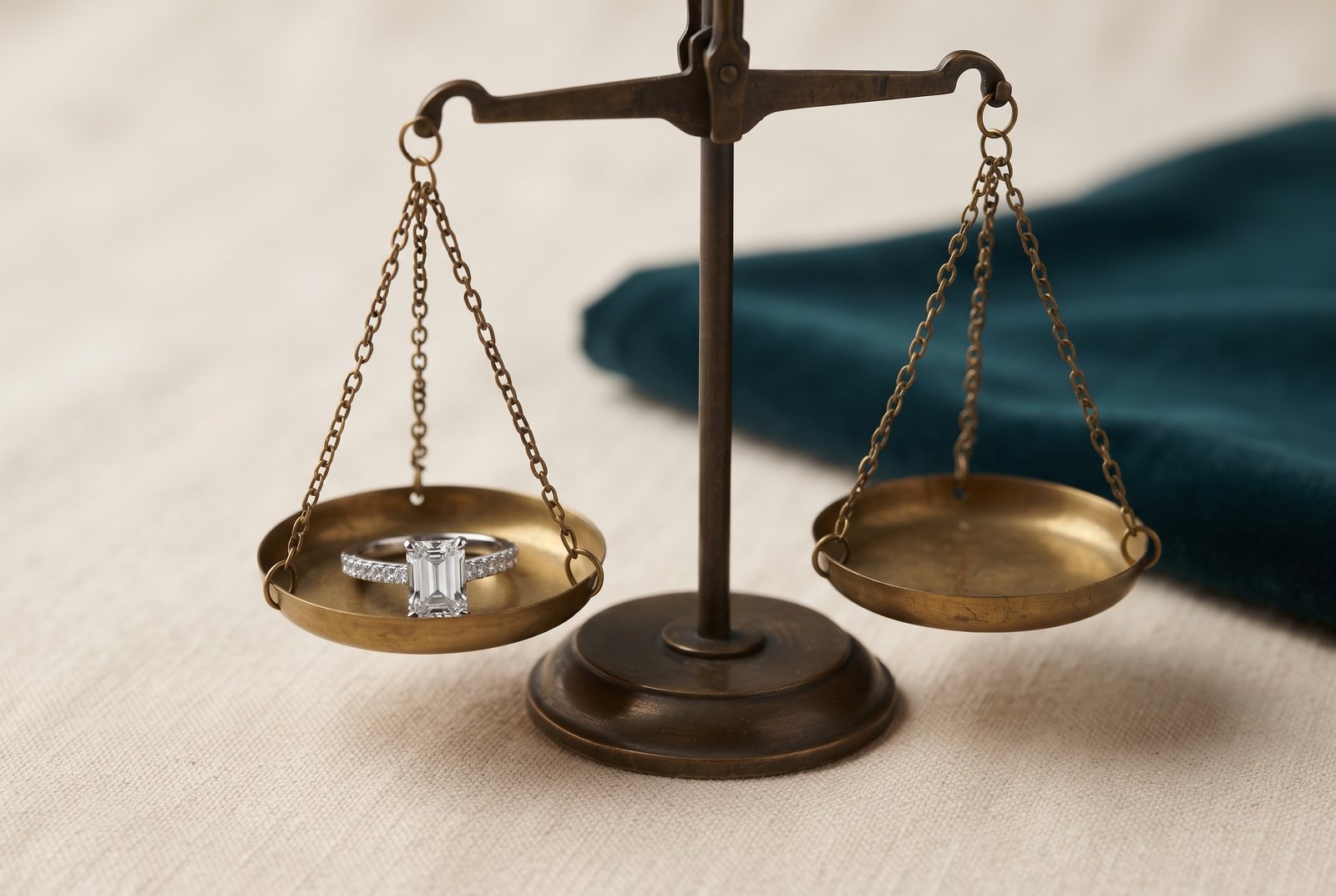
Short answer: A diamond can be sold, but it cannot be cashed in as easily as gold, or at a price close to what you paid. A natural diamond can be sold, especially if it is certified and of good quality, but the sale price is usually well below the retail price. The resale value of a lab-grown diamond is low. When selling, the certificate and the invoice are your biggest help.
Why are gold and diamonds different?
Gold has a price per gram announced every day, so it is easy to cash in. A diamond has no such single price: each stone is valued separately by its carat, cut, colour and clarity. The buyer has to examine the stone, check its report and work out the price they could sell it for. That is why selling a diamond is slower, and the buying price is noticeably lower than the selling price.
The resale value of natural diamonds
- Certified and large stones sell more easily; the buyer is sure of the stone’s characteristics.
- Small stones and side stones (in half eternity, full eternity and halo rings) are usually not valued one by one; their resale value is low.
- The setting is usually valued at its gold value; the workmanship is not paid back.
In short, a natural diamond holds its value relatively well, but expecting to “sell it for what I paid” is not realistic.
The resale value of lab-grown diamonds
The second-hand market for lab-grown diamonds is limited and their value is low. We do not hide this: a lab-grown diamond is bought to wear, not as an investment. Its advantage appears when you buy: a bigger, cleaner stone for the same budget. So if resale value matters to you, a natural diamond is the better choice; if the beauty of the ring matters, a lab-grown diamond is. Should you buy a lab-grown diamond?
What sets the price when you sell a diamond?
- Certificate: A stone with an independent report sells much more easily and at a better price than one without. What is a certificate?
- The stone’s characteristics: Carat, cut, colour and clarity, and whether the stone has any chips or scratches. What are the 4Cs?
- Origin: Natural or lab-grown? The report shows it.
- Gold purity and weight: The setting is usually valued at its gold value.
- Documents: The invoice and report prove the stone’s history and give confidence.
Think about selling when you buy: if you may sell it one day, always buy the stone with its independent certificate and keep the invoice. The value of a stone without a report is left to the buyer’s eye.
Transforming instead of selling
Instead of selling a diamond you own, you can also turn it into a new piece: moving the stone from an old ring into a new setting, or making it into earrings or a necklace. If the stone’s condition and measurements allow it, you get a new piece of jewellery without buying a new stone. If you have an idea like this, you can send us a photo of the stone and its report, if it has one.
Frequently asked questions
Not at a daily price like gold. A diamond is sold after its characteristics are examined, at the buyer’s offer; this price is usually well below the retail price. Large, rare, certified natural diamonds can store value in the long term; but most diamond jewellery is bought to wear, not as an investment. Lab-grown diamonds are not suitable as an investment. You can, but because the buyer cannot be sure of the stone’s characteristics, the offer will be low. A stone with a report sells much more easily and at a better price. Because the second-hand market is limited, buy-back terms vary from seller to seller and the value is low. That is why a lab-grown diamond should be bought to wear.Can you cash in a diamond?
Is a diamond an investment?
Can you sell a diamond without a certificate?
Are lab-grown diamonds bought back?
Blog
Keep reading
Buying Guide
1 Carat Solitaire: How Big Is It and What Sets the Price?
A 1 carat round solitaire measures about 6.5 mm across. We explain how it looks on the finger, its size in each shape and…
3 min read
Buying Guide
What Determines Baguette Ring Prices?
A baguette ring's price is not set by a single stone but by the number of stones, their total carat, how well they match…
4 min read
Buying Guide
What Makes Solitaire Ring Prices Vary?
Two solitaires of the same carat can differ greatly in price. We explain how the stone's 4Cs, its shape, its certificate and the setting…
4 min read
Buying Guide
How Many Carats Should a Solitaire Be?
The right carat depends on the shape of the hand, style and budget. We show how stones from 0.30 to 3 carats look on…
3 min read