Ring Guide
How to Choose an Engagement Ring: A Step-by-Step Guide
Budget, stone shape, carat, gold colour and ring size: the decisions to make in order when choosing an engagement ring, and the most common mistakes.
4 min readUpdated: October 7, 2026
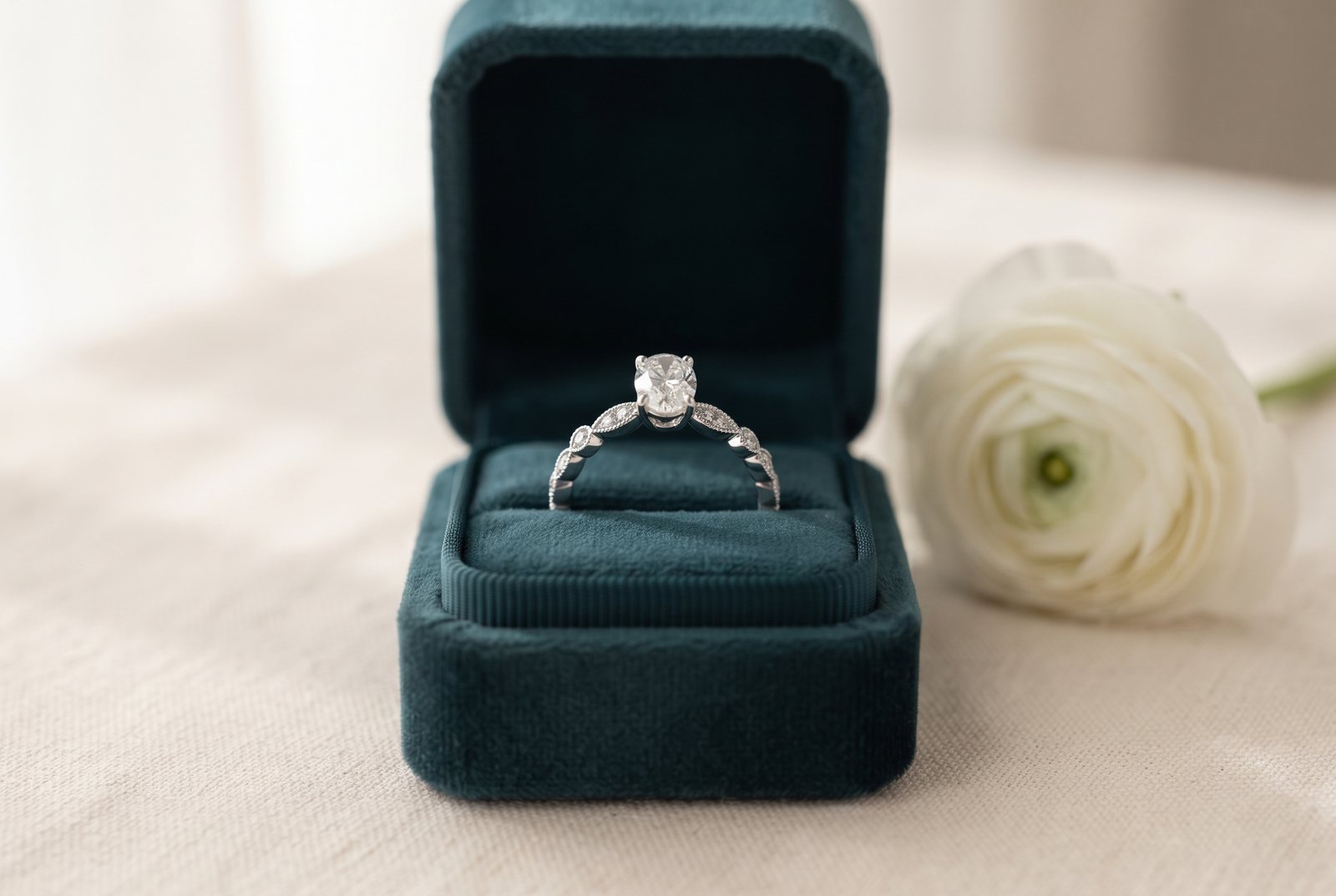
Short answer: When choosing an engagement ring, decide five things in this order: budget, stone shape, carat, gold colour and ring size. If you choose a lab-grown diamond, the same budget gets you a bigger or better stone. The rest comes down to reading your partner’s style correctly.
First, read their style
The best clue is the jewellery they wear every day. Look at the colour of their rings (white or yellow), whether they are thin or wide, understated or eye-catching. A large halo ring may feel wrong to someone who dresses simply, and a very thin solitaire may feel too modest to someone who loves statement pieces. If you are not sure, the classic four-prong solitaire is the safest choice: it suits every hand and every style and never goes out of fashion.
1. Set the budget first
Rules like “three months’ salary” are an advertising slogan, not a measure. Pick a figure that does not strain you and look for the best stone within it. For the same budget there are two paths: a smaller natural diamond or a bigger lab-grown diamond. Both are real diamonds; the only difference is origin.
2. Choose the stone shape
The shape sets the character of the ring and also affects the price:
- Round: The cut that returns the most light, and the most classic. Always a safe choice.
- Oval: Looks bigger than a round stone of the same carat and makes the finger look longer. The most popular shape of recent years. Why oval?
- Pear (teardrop): Graceful and different; it slims the finger.
- Emerald and radiant: Angular, calm, architectural light. Perfect for a minimal style.
- Princess and cushion: Square shapes, with a modern or romantic feel.
To compare shapes, you can see the stone on a hand at true scale in our ring designer.
3. Be realistic about carat
Carat is the stone’s weight; shape and cut also decide how big it feels. A practical tip: stones just under 1 carat (such as 0.90) look almost the same to the eye but cost noticeably less, because the price jumps at the 1-carat threshold. More in what is a carat.
A common choice with lab-grown diamonds: spending the budget on cut quality and clarity rather than on more carats. Because lab-grown diamonds are more affordable than natural stones, the same money buys a stone that is both bigger and cleaner.
4. Decide on the gold colour
White gold makes the stone look bigger and whiter; yellow gold is warm and classic; rose gold gives a soft, romantic feel. The easiest rule is the same as before: choose the colour they already wear.
5. Find the ring size discreetly
The surest way is to borrow a ring they always wear, or measure its inside diameter. On our ring size page you can measure it with the circle on your screen or look up the size in the chart. If you are unsure, go one size up; making a ring smaller is easier than making it bigger. Solitaire rings can be resized; only fully stone-set designs such as full eternity rings may not allow it.
6. See the certificate and the real stone
The stone should have an independent laboratory report, and the report number should be inscribed on the stone’s girdle. For a lab-grown diamond, the report states clearly that the stone was grown in a laboratory. Ask for the report before you buy; we explain how to read it. Look at real pieces, not just pictures: the photos in our model gallery are real pieces made in our workshop.
7. Plan the timing
A ring made for you is produced to order. If you have set a date for the proposal, write to us early; we will choose the stone together and tell you the production time so the ring is ready for the day.
Frequently asked questions
Tradition favours the solitaire, but it is not a rule. For someone with a minimal style, a slim half eternity ring or a halo with a small stone can also be an engagement ring. What matters is that it is a ring they can wear every day. In Turkey, the proposal ring is usually worn on the ring finger of the left hand; the wedding bands are worn on the right hand at the engagement and move to the left hand at the wedding. More: which finger does a ring go on. Yes. A lab-grown diamond is a real diamond with the same chemistry, hardness and light as a natural diamond, and it lasts a lifetime. It lets you choose a bigger or cleaner stone for the same budget. Measure a ring they always wear, or go one size up. Solitaire rings can be resized later; we explain how to measure on the ring size page.Should an engagement ring be a solitaire?
Which finger does an engagement ring go on?
Is a lab-grown diamond suitable for an engagement ring?
What if I do not know the ring size?
Blog
Keep reading
Ring Guide
Can a Ring Be Resized Up or Down?
A ring's size can usually be changed by one or two sizes, but not on every style. We explain which rings can be adjusted…
4 min read
Ring Guide
Ring Design: Design Your Own Solitaire in 4 Steps
Designing your own ring is easier than you think: shape, carat, gold colour and quality. We explain how to design your solitaire in four…
4 min read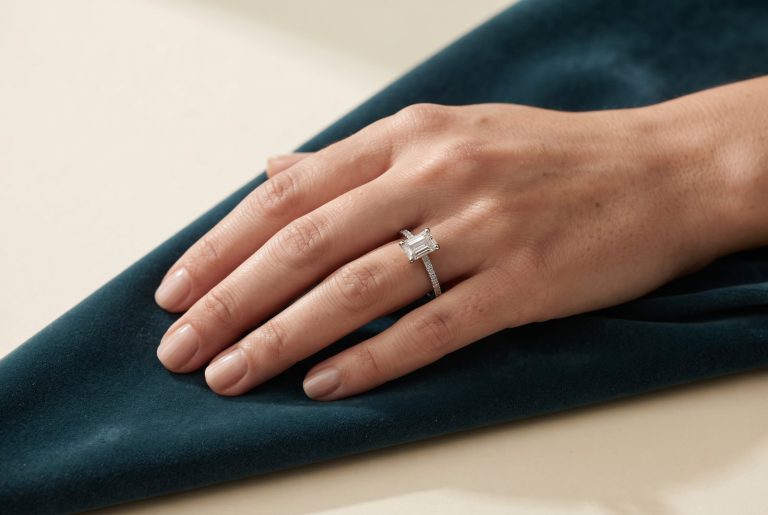
Ring Guide
Emerald Cut Solitaire: The Elegance of a Step Cut
The emerald cut is a step cut that shows off clarity and depth more than sparkle. We explain why clarity matters so much and…
3 min read
Ring Guide
How to Wear a Solitaire and a Wedding Band Together
How to wear a solitaire and a wedding band on the same finger in harmony: order, width, height and colour. We explain how to…
4 min read