Buying Guide
What Determines Lab-Grown Diamond Prices?
The price of a lab-grown diamond is set by its carat, cut, colour, clarity and setting. We explain how much each one affects the price and how to make the most of your budget.
4 min readUpdated: October 6, 2026
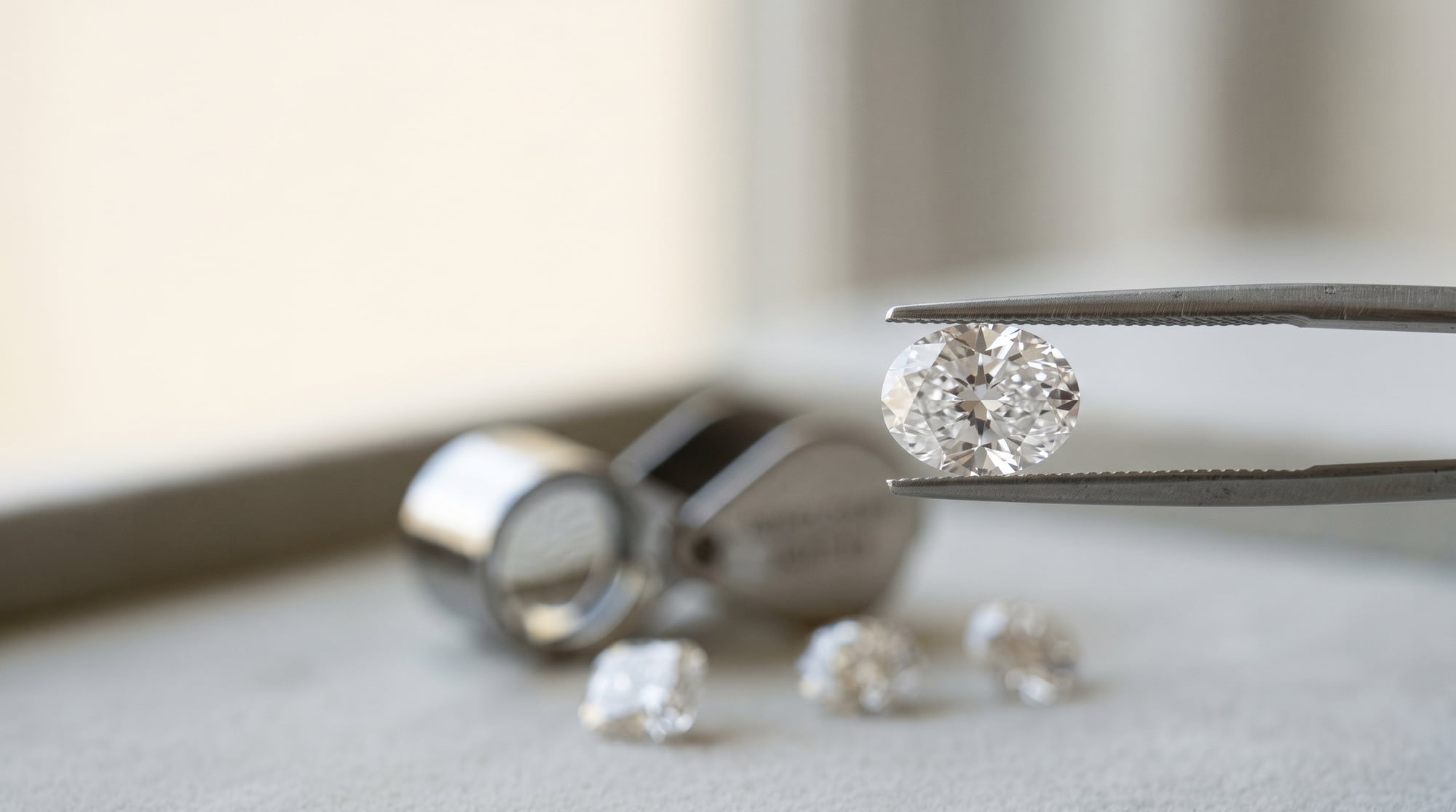
Short answer: The price of a lab-grown diamond, and so of a solitaire ring, is set by the stone’s carat, cut, colour and clarity and by the ring’s setting. It is far more affordable than a natural diamond with the same characteristics. Because every stone is unique and prices change, we give a current price for your choice rather than a fixed list.
Why is there no fixed price list?
No two diamonds are identical. Two stones of the same carat can differ in price by a single grade of colour or clarity. On top of that come the gold price and the workmanship of the setting. So an accurate price can only be given for a specific stone and a specific design.
To make this easy, in our ring designer you can choose the stone’s shape, carat and gold colour and send your choice to us on WhatsApp with a single tap.
Six things that set the price
1. Carat
This affects the price most. Price does not rise in a straight line with carat; as the stone gets bigger, the price per carat rises too. There is also a jump at round values such as 1, 1.5 and 2 carats. More: what is a carat.
2. Cut
It has two meanings: the stone’s shape (round, oval, emerald…) and the quality of the cut. The round cut is usually more expensive than other shapes because it is the most in demand and loses the most rough in cutting. Cut quality decides how much the stone will sparkle.
3. Colour
The closer the stone is to colourless, the higher the price. D–F is colourless, while G–H is the class that looks white when worn.
4. Clarity
A stone with fewer marks inside is more expensive. VS stones and above look clean to the naked eye. Colour and clarity in detail: diamond colour and clarity.
5. Certificate
A report from an independent laboratory documents the stone’s characteristics and shows what the price is based on. More: GIA and IGI certificates.
6. Setting
This is the ring that holds the stone. The gold’s purity and weight, whether there are side stones and the fineness of the workmanship all add to the total. A plain solitaire setting costs differently from one with side stones or a halo.
How does the price compare with natural diamond?
A lab-grown diamond is noticeably more affordable than a natural diamond of the same carat, colour and clarity. The reason is not a difference in quality but in origin: a natural diamond is mined and rare, while a lab-grown diamond is grown under controlled conditions within weeks. Chemically, both stones are the same diamond.
You can use this difference in two ways: buy a bigger or higher-quality stone for the same budget, or buy the same stone for a smaller budget.
Five ways to make the most of your budget
- Do not compromise on cut. The cut is what makes a stone sparkle; a well-cut stone looks bigger and livelier than it is.
- Eye-clean clarity is enough. VS clarity looks the same as VVS when worn.
- Choose a colour that looks white when worn. G–H colour looks colourless to most eyes.
- Look just below the round numbers. The size difference between 0.90 carat and 1 carat, for example, is hard to see.
- Consider elongated cuts. Oval, pear and marquise cuts look bigger at the same carat.
About resale value: The resale value of a lab-grown diamond is lower than that of a natural diamond. So it should be bought to wear and enjoy, not as an investment. Knowing this from the start helps you make the right decision.
Frequently asked questions
The price depends on the stone’s carat, cut, colour and clarity, and also on the gold price and the workmanship of the setting. When any of these changes, the price changes too. That is why the current price is given for the chosen stone and design. Because they are not mined; they are grown in a laboratory within weeks and are not as rare as natural diamonds. Their chemistry, hardness and light are the same as a natural diamond. The price depends on the stone’s colour, clarity and cut and on the chosen setting. Tell us the characteristics you are looking for and we will send you suitable real stones with their current prices. No. Its resale value is low. A lab-grown diamond is bought to wear, not as an investment.Why do lab-grown diamond prices vary?
Why are lab-grown diamonds cheaper than natural diamonds?
How much is a 1-carat lab-grown diamond ring?
Is a lab-grown diamond an investment?
Blog
Keep reading
Buying Guide
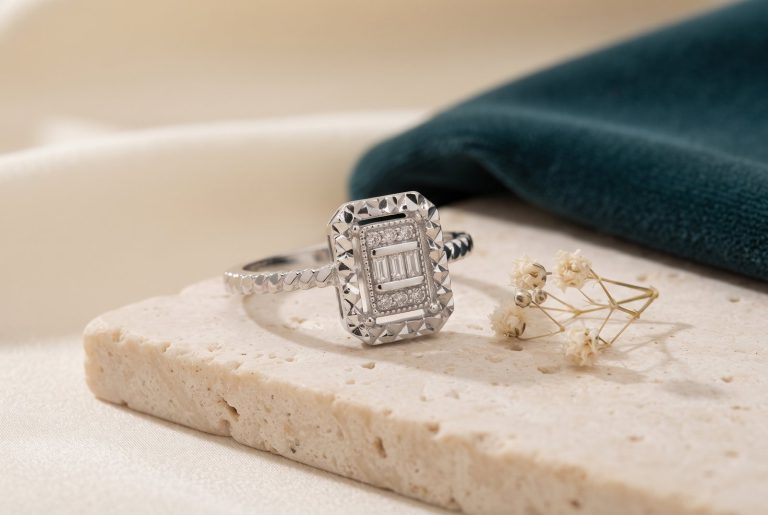
What Determines Baguette Ring Prices?
A baguette ring's price is not set by a single stone but by the number of stones, their total carat, how well they match…
4 min read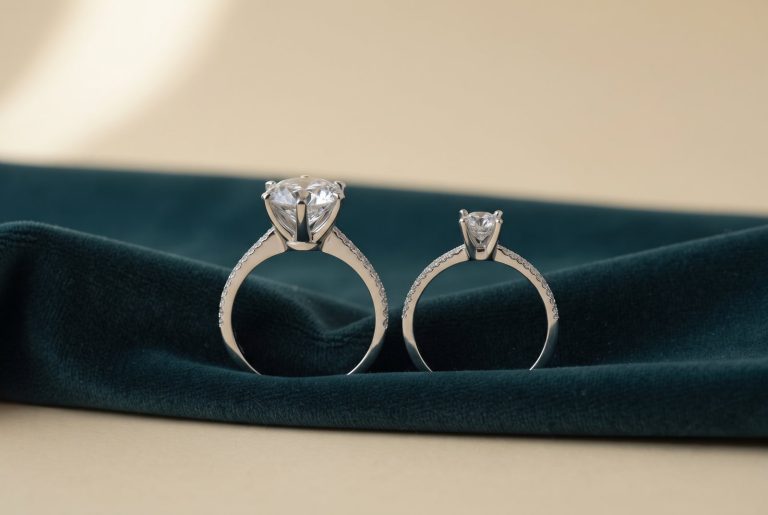
Buying Guide
What Makes Solitaire Ring Prices Vary?
Two solitaires of the same carat can differ greatly in price. We explain how the stone's 4Cs, its shape, its certificate and the setting…
4 min read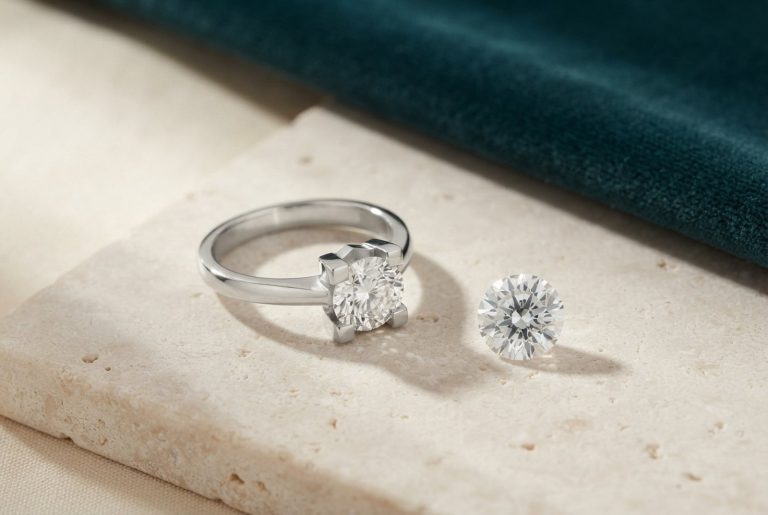
Buying Guide
Should You Buy a Lab-Grown Diamond? Pros and Cons
A lab-grown diamond is a smart choice for some people and not for others. We explain its pros and cons honestly, and who it…
4 min read
Buying Guide
1 Carat Solitaire: How Big Is It and What Sets the Price?
A 1 carat round solitaire measures about 6.5 mm across. We explain how it looks on the finger, its size in each shape and…
3 min read