Diamond Basics
Diamond vs Brilliant: What Is the Difference?
Every brilliant is a diamond, but not every diamond is a brilliant. We explain the difference between the two, why the brilliant cut sparkles more and what to check when buying.
3 min readUpdated: October 6, 2026
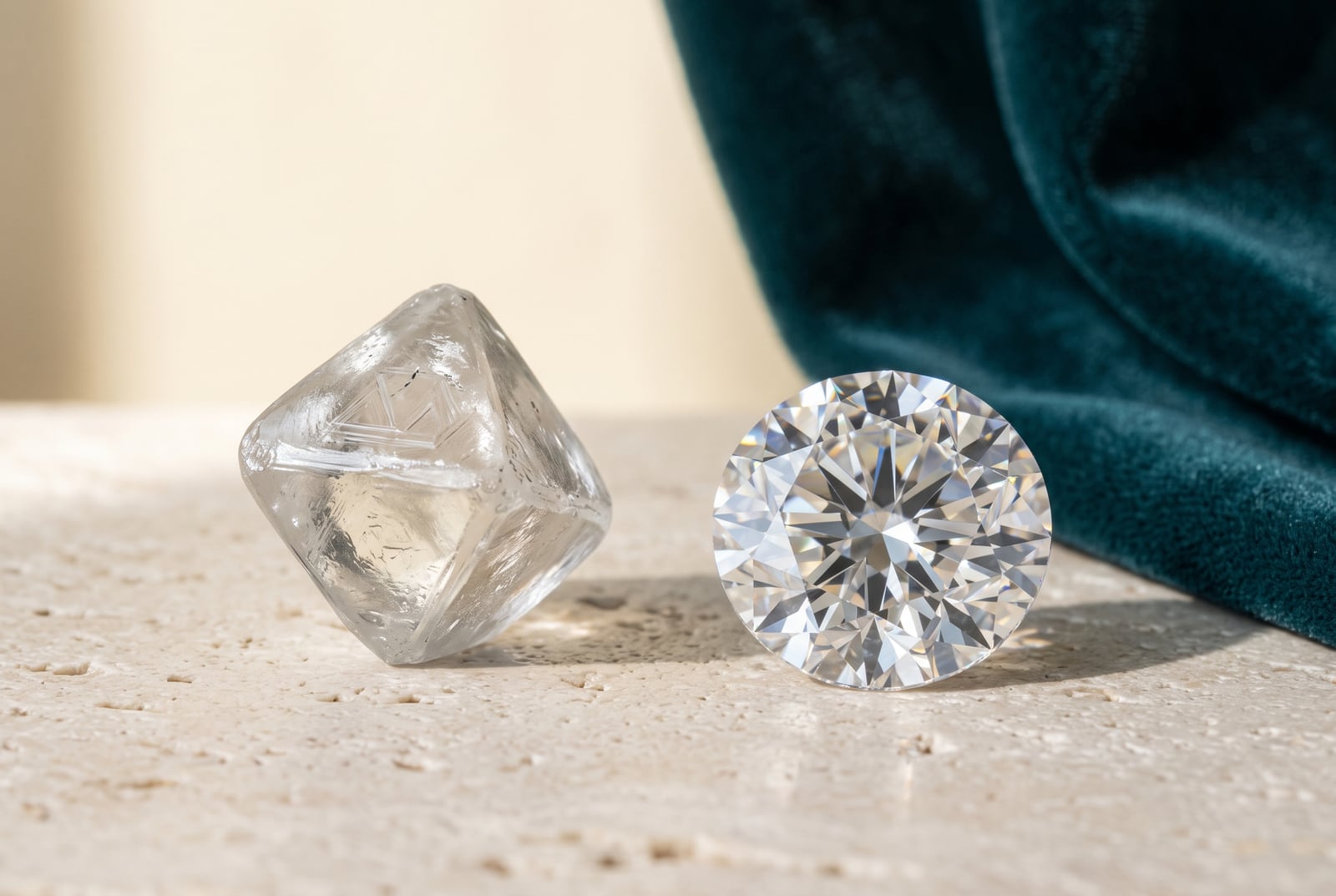
Short answer: “Diamond” is the name of the stone; a “brilliant” is a diamond cut with a special 57-facet cut. So every brilliant is a diamond, but not every diamond is a brilliant. In Turkish jewellery shops, the word “elmas” (diamond) usually refers to older cuts with fewer facets, while “pırlanta” means the brilliant cut.
What is a diamond?
A diamond is a mineral formed by carbon atoms arranged in a very tight structure. It is the hardest known natural material, scoring 10 on the hardness scale. Rough diamond from the earth is matte and dull; it gains its sparkle only after it is cut and polished.
What is a brilliant?
A brilliant is not a type of stone but a way of cutting one. When a diamond is cut with 57 facets calculated to return the most light, it is called a brilliant. Counting the tiny facet at the bottom tip of the stone, the number becomes 58.
In this cut, light entering the stone from the top reflects off the lower facets and comes back out through the top. That is the reason for a brilliant’s famous lively sparkle. The proportions of the cut were calculated mathematically in the early 20th century and have been refined ever since.
The differences between a diamond and a brilliant
| “Diamond” (as jewellers use it) | Brilliant | |
|---|---|---|
| What is it? | The name of the stone; also older cuts with fewer facets | The 57-facet cut of a diamond |
| Number of facets | Fewer | 57 (58 with the tip) |
| Sparkle | Calmer, more muted | Very lively and bright |
| Where you see it | Antique and traditional jewellery | Most solitaires, wedding bands and modern jewellery |
This is also why there is a price difference between a “diamond ring” and a “brilliant ring” in Turkish shops: the brilliant cut takes more work, more of the rough stone is lost in cutting, and the finished stone is far brighter.
Are oval, pear and emerald cut stones brilliants?
Technically, “brilliant” is the name of the round cut. Shapes such as oval, pear, marquise, emerald and princess are called “fancy cuts”. In everyday language and in shop windows, however, they are all called diamonds or brilliants: “oval diamond”, “emerald cut diamond” and so on. The certificate states the stone’s shape and cutting style separately.
To see how the shapes look on the finger, you can compare eight cuts on the same hand in our ring designer.
Lab diamond or lab-grown brilliant?
Both are correct and usually mean the same thing. A stone grown in a laboratory is a diamond; when it is cut as a brilliant, it is a lab-grown brilliant. Its chemistry, hardness and light are the same as a natural diamond. More: what is a lab-grown diamond.
What to check when buying
- Read the label. The stones in a piece labelled simply “diamond” may not be brilliant cut.
- Ask about the cut. The cut decides most of a stone’s sparkle.
- Ask for a certificate. The report states the stone’s shape, cut, carat, colour and clarity.
Frequently asked questions
At the same weight and quality, a brilliant-cut stone is more valuable, because the brilliant cut takes more work, more is lost in cutting and the stone looks much brighter. A brilliant cut has 57 facets. Counting the tiny facet at the bottom tip of the stone, it has 58. Yes, both are the same mineral: diamond, made of carbon. The difference is the cut. The brilliant is the brightest way to cut a diamond. Yes. A stone grown in a laboratory is chemically diamond, and when cut as a brilliant it is a real brilliant-cut diamond.Which is more valuable, a diamond or a brilliant?
How many facets does a brilliant have?
Are a diamond and a brilliant the same stone?
Is a lab-grown diamond a real diamond?
Blog
Keep reading
Diamond Basics
Diamond Clarity Scale: From FL to I3
Clarity is how visible the tiny marks inside a diamond are. We explain the FL, IF, VVS, VS, SI and I grades with a…
3 min read
Diamond Basics
Cubic Zirconia vs Diamond: What Is the Difference?
Cubic zirconia looks like a diamond at first glance, but it is a very different stone. We explain the differences in hardness, light, weight…
3 min read
Diamond Basics
Diamond Sparkle: What Are Brilliance, Fire and Scintillation?
A diamond's sparkle comes from three separate light effects: brilliance, fire and scintillation. We explain what decides them and what people really mean by…
3 min read
Diamond Basics
What Is Diamond Fluorescence? Good or Bad?
Fluorescence is the blue glow some diamonds give off under ultraviolet light. We explain how it appears on the report, whether it affects how…
3 min read