Jewellery Guide
Can a Diamond Break or Scratch?
Diamond is the hardest natural material, but it is not unbreakable. We explain the difference between hardness and toughness, which cuts are delicate and how to protect your stone.
3 min readUpdated: October 7, 2026
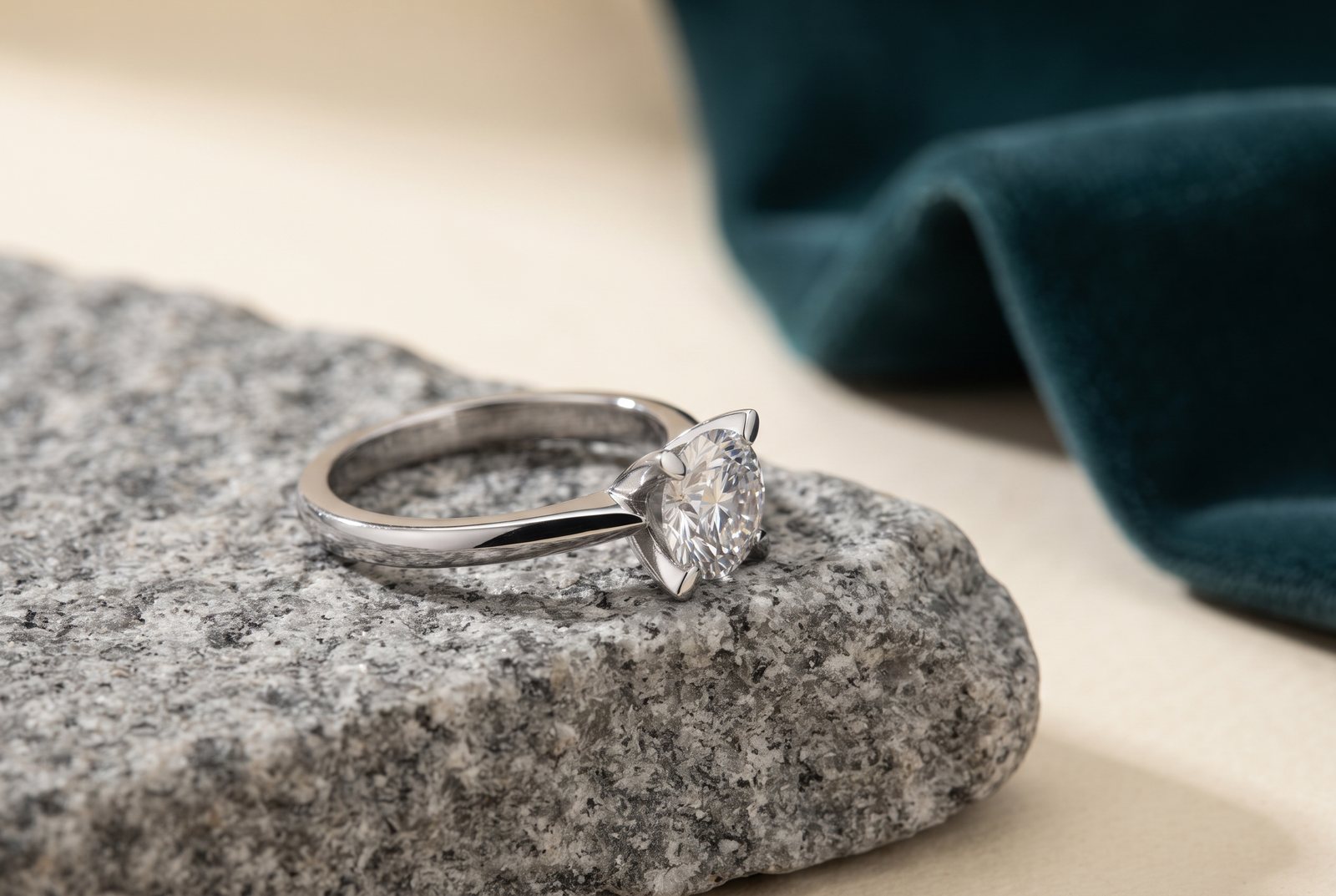
Short answer: A diamond does not scratch, but it is not unbreakable. It is the hardest known natural material (Mohs 10), so almost nothing in daily life can scratch it. But hardness and resistance to knocks are not the same thing: a hard knock, especially on the stone’s thin edge or its points, can chip or break a diamond. With the right setting and a few simple habits, this risk becomes very small.
The difference between hardness and toughness
- Hardness: a material’s resistance to scratching. Diamond is the hardest; only another diamond can scratch it.
- Toughness: resistance to knocks and breaking. A diamond’s crystal has weaker planes in certain directions; a hard knock in those directions can split the stone.
So a diamond is not affected by rubbing against a key, but striking a marble worktop hard at an angle can, though rarely, cause a chip.
A diamond’s sensitive points
The girdle (edge)
The widest outline of the stone is called the girdle. A girdle cut very thin is more sensitive to knocks. Reports state the girdle thickness; an extremely thin girdle should be avoided.
Points
The ends and corners of shapes such as marquise, pear and princess are the most sensitive points. These ends should be protected by “V”-shaped prongs. Marquise · princess · pear.
Inclusions close to the surface
Crack-like inclusions (feathers) close to the stone’s surface can weaken it at that point. So clarity sometimes matters not only for looks but for durability too. The clarity scale.
Settings that protect the stone
| Setting | Protection |
|---|---|
| Bezel | The highest; the stone’s edge is wrapped completely in metal |
| Six prongs | High; the stone is held at more points |
| V prong | Protects the points |
| Halo | Protects the centre stone’s edge by surrounding it |
| Four prongs | Good; the most classic arrangement, showing the most of the stone |
Diamond scratches diamond: because it is the hardest material, a diamond can scratch other diamonds, other precious stones and gold. Store your jewellery in separate compartments or separate pouches so the pieces do not rub against each other.
Protection in everyday wear
- Take your ring off for heavy work, sport, gardening and carrying things.
- Be careful not to knock it against hard surfaces such as doors, worktops and metal railings.
- Have the prongs checked once a year; a loose prong can let the stone fall out or leave it exposed to knocks.
- If you notice a chip in the stone, show the ring to a jeweller; small chips can often be removed by re-polishing the stone.
Can you shower with a diamond ring? · how to clean a diamond.
Is a lab-grown diamond just as durable?
Yes. A lab-grown diamond has the same crystal structure and hardness as a natural diamond; it does not scratch in the same way and is sensitive to knocks at the same points. Caring for it and protecting it are the same. What is a lab-grown diamond?
Frequently asked questions
A very hard knock, especially on the stone’s thin edge or its points, can chip or break a diamond. In everyday wear this is rare. No. Diamond is the hardest natural material; only another diamond can scratch it. Show the stone to a jeweller. Small chips can often be removed by re-polishing the stone; the stone may lose a very small amount of weight in the process. Rings with a bezel setting and a round or oval stone are the most durable; the stone’s edge is fully protected by metal.Can a diamond break?
Can a diamond be scratched?
What do you do if a diamond is chipped?
What is the most durable diamond ring?
Blog
Keep reading
Jewellery Guide
Wedding Anniversary Gifts: Diamond Ideas
There are lovely ways to give a diamond on an anniversary: a five-stone ring, an eternity ring, solitaire studs, a tennis bracelet. We share…
3 min read
Jewellery Guide
14 Karat or 18 Karat? Choosing the Gold for a Diamond Ring
14 karat is harder and more durable; 18 karat has a higher gold content and a warmer tone. We explain the difference between the…
3 min read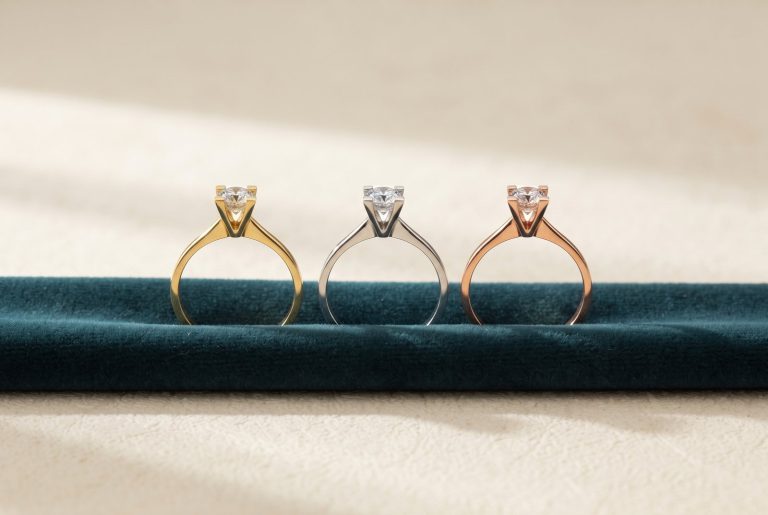
Jewellery Guide
White, Yellow or Rose Gold?
Gold colour changes how a diamond looks and the character of the ring. We compared the three gold colours by stone, skin tone and…
3 min read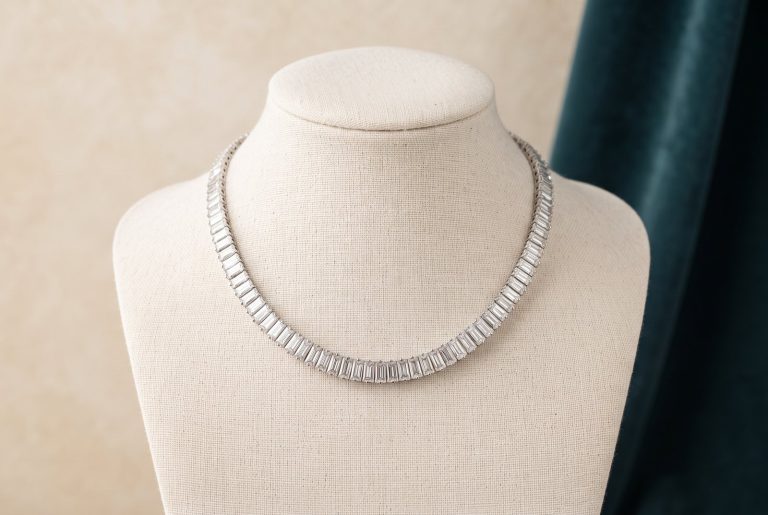
Jewellery Guide
Baguette Necklaces: Styles and How to Choose One
A baguette necklace brings the calm, modern light of rectangular stones to the neckline. We explain baguette necklace styles, chain length and how it…
3 min read