Ring Guide
Wedding Band Styles: Classic, Full Eternity, Half Eternity and Five-Stone
Plain, full eternity, half eternity, five-stone, baguette and channel-set bands: who each suits, how to choose width and size, and what sets the price. All the wedding band styles compared in one article.
4 min readUpdated: October 7, 2026
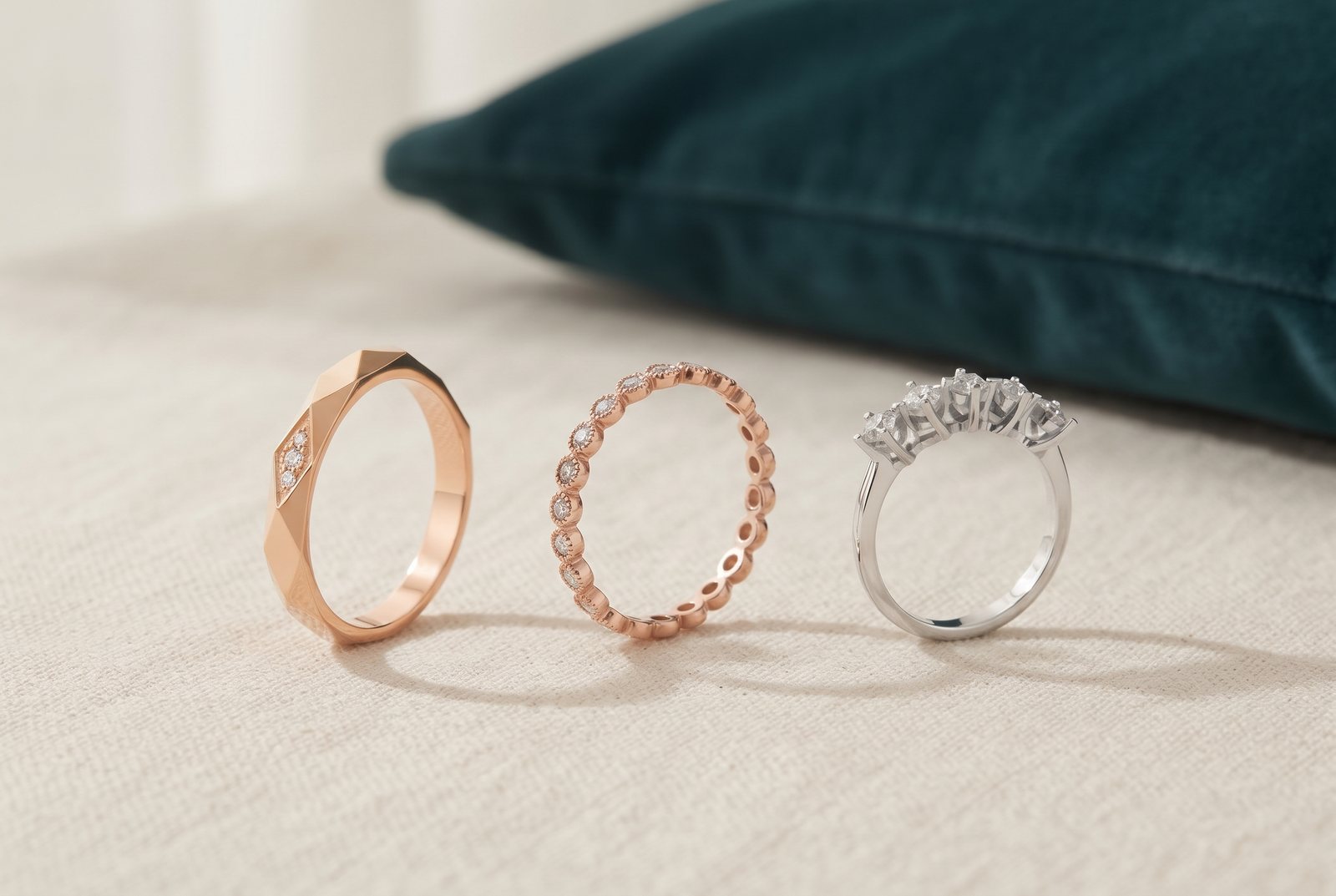
Short answer: Wedding bands fall into four main groups: plain (classic) bands, full eternity, half eternity and five-stone rings. Because a band is worn every day, comfort, durability and size matter as much as looks. If you want a diamond band, lab-grown diamonds mean more and cleaner stones for the same budget.
Wedding band styles one by one
1. Plain (classic) band
A simple ring without stones. The surface can be polished, matte or textured; the profile can be rounded (domed) or flat. It is the most comfortable and most durable style, and it can always be resized. Couples often choose the women’s and men’s widths of the same design.
2. Full eternity
Diamonds run all the way around the band, so the light never stops whichever way the ring turns. It is the most eye-catching wedding band style. One important point: because stones cover the whole band, it usually cannot be resized later. More in what is a full eternity ring; to see the design: full eternity.
3. Half eternity
Stones sit only on the visible upper half, and the lower half is plain gold. From above it looks the same as a full eternity ring; it is more comfortable on the palm side, can be resized and costs less. This is the most balanced choice for everyday wear: half eternity.
4. Five-stone
Five diamonds side by side across the top. The stones are larger and more noticeable than in a half eternity ring, and the five stones are believed to carry a meaning. We explain it in what is a five-stone ring; the design: five-stone.
Others
- Baguette band: Rectangular stones side by side; clean and modern. Baguette half eternity.
- Channel band: Stones are set between two metal walls; no prongs, nothing to catch, very durable.
- Single-row pavé band: A very slim band with tiny stones; ideal to wear with a solitaire.
Which band suits whom?
| If you want | We suggest |
|---|---|
| The most comfortable, most durable | A plain band or a channel band |
| Sparkle from every angle | Full eternity |
| Sparkle + comfort + resizable | Half eternity |
| Bold, “visible” stones | Five-stone |
| To wear with a solitaire | A slim half eternity or pavé band |
| Someone who works a lot with their hands | A plain band, channel band or low-set half eternity |
What to look for when choosing a wedding band
- Width: A slim band (2–3 mm) is delicate and light; a wide band (4 mm and over) is more noticeable but feels tighter on the finger. With a wide band you may need half a size up.
- Profile: Bands with a slightly domed inside (“comfort fit”) slide on more easily.
- Gold colour: If it will be worn with a solitaire, choose the same colour. Couples can choose different colours; you do not have to match.
- Size: A wedding band is worn every day, and fingers swell in the morning and in the heat. Measure in the middle of the day: how to find your ring size.
- Stone settings: In designs with tiny stones, strong prongs are the key to a long life; in our workshop every stone is hand-set and checked.
How do you wear a solitaire and a wedding band together? The band first, the solitaire above it, or the two on different fingers. Most couples choose a slim half eternity band that suits the solitaire’s shank. We explain which finger they go on separately.
What sets the price of a wedding band?
For a plain band, the price is set by the gold weight and purity. For stone-set designs, the total carat and number of stones, their clarity and colour grades and the workmanship are added. A full eternity ring costs more because, for the same stone size, it carries roughly twice as many stones as a half eternity ring. Instead of a fixed list, we give a current price for the design and stones you choose.
Frequently asked questions
In Turkey it is worn on the ring finger of the right hand at the engagement and on the ring finger of the left hand after the wedding. More: which finger does a ring go on. Yes; choose a design with strong prongs and low settings, and take it off for heavy work. Channel-set and half eternity designs are the most comfortable for everyday wear. If you want uninterrupted sparkle from every angle, choose full eternity; if you want comfort, a resizable band and a lower price, choose half eternity. From above, the two look the same. Yes. Lab-grown diamonds are a very common choice for the small stones in wedding bands; they let you choose cleaner, whiter stones for the same budget. Every stone is a real diamond.Which hand does a wedding band go on?
Does a diamond wedding band stand up to everyday wear?
Full eternity or half eternity?
Are lab-grown diamonds used in wedding bands?
Blog
Keep reading
Ring Guide
Can a Ring Be Resized Up or Down?
A ring's size can usually be changed by one or two sizes, but not on every style. We explain which rings can be adjusted…
4 min read
Ring Guide
Ring Design: Design Your Own Solitaire in 4 Steps
Designing your own ring is easier than you think: shape, carat, gold colour and quality. We explain how to design your solitaire in four…
4 min read
Ring Guide
Emerald Cut Solitaire: The Elegance of a Step Cut
The emerald cut is a step cut that shows off clarity and depth more than sparkle. We explain why clarity matters so much and…
3 min read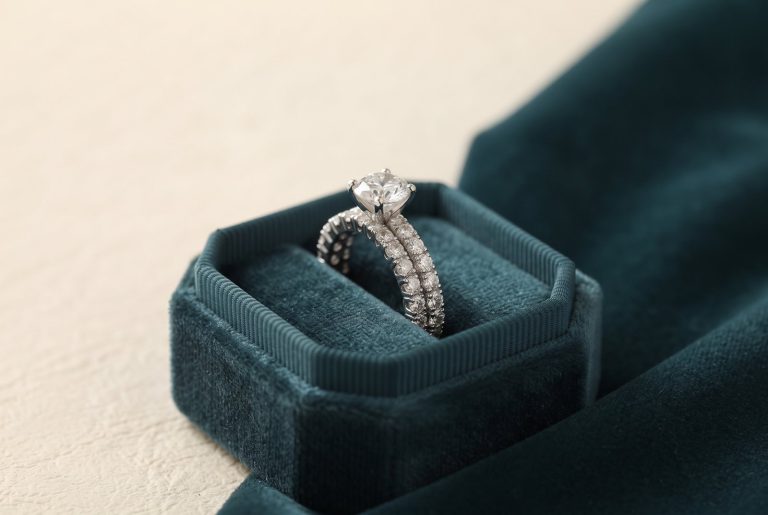
Ring Guide
How to Wear a Solitaire and a Wedding Band Together
How to wear a solitaire and a wedding band on the same finger in harmony: order, width, height and colour. We explain how to…
4 min read